

Our CHOCOLATE
SOURCING & PROCESS
Our chocolate is all crafted from Bean To Bar in our factory, located in the Greenwood neighborhood of Seattle, WA.
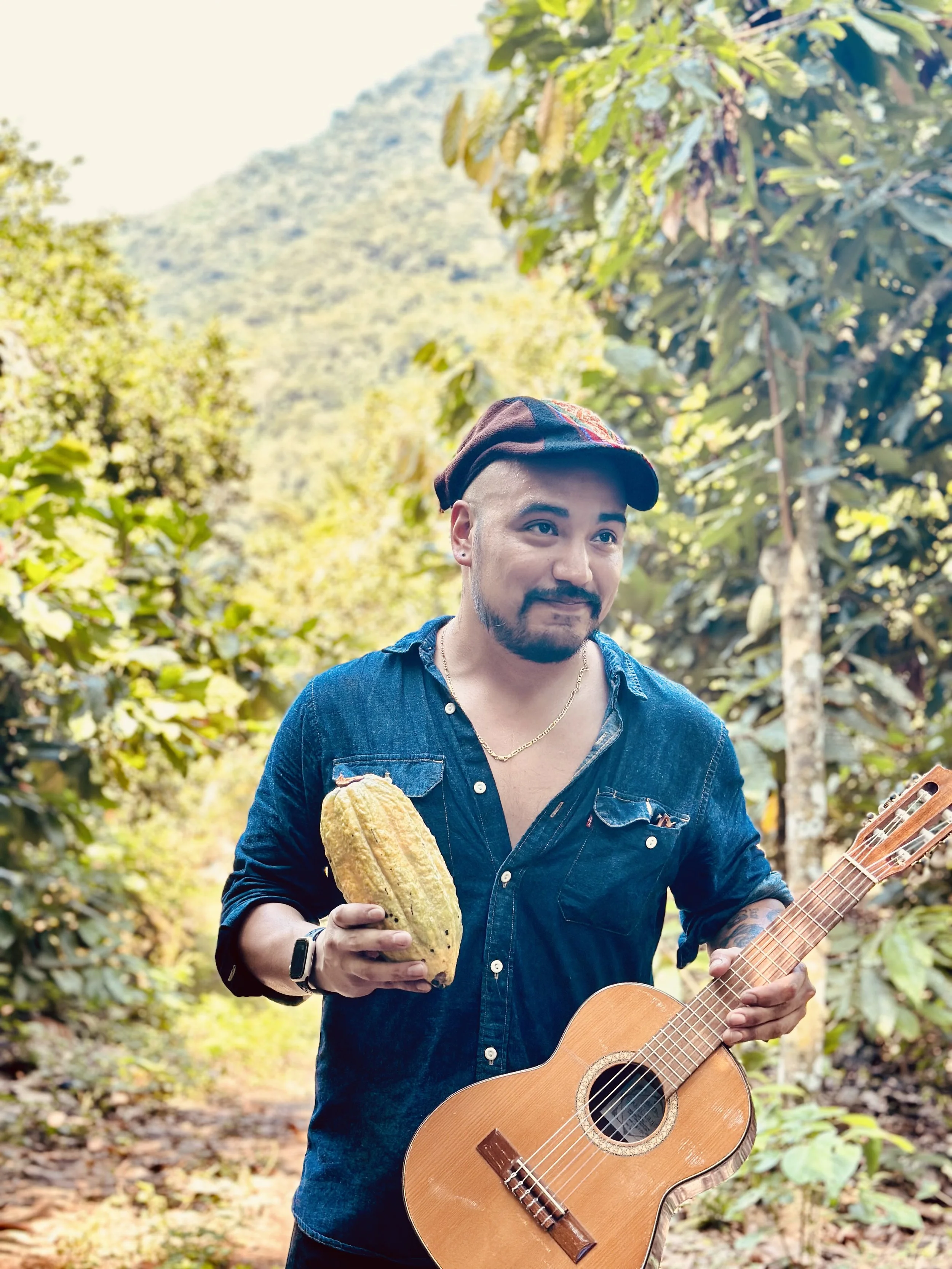
We’re proudly a Queer and Latinx-owned business.
All of our bars are vegan, dairy-free, and made in a nut-free facility.

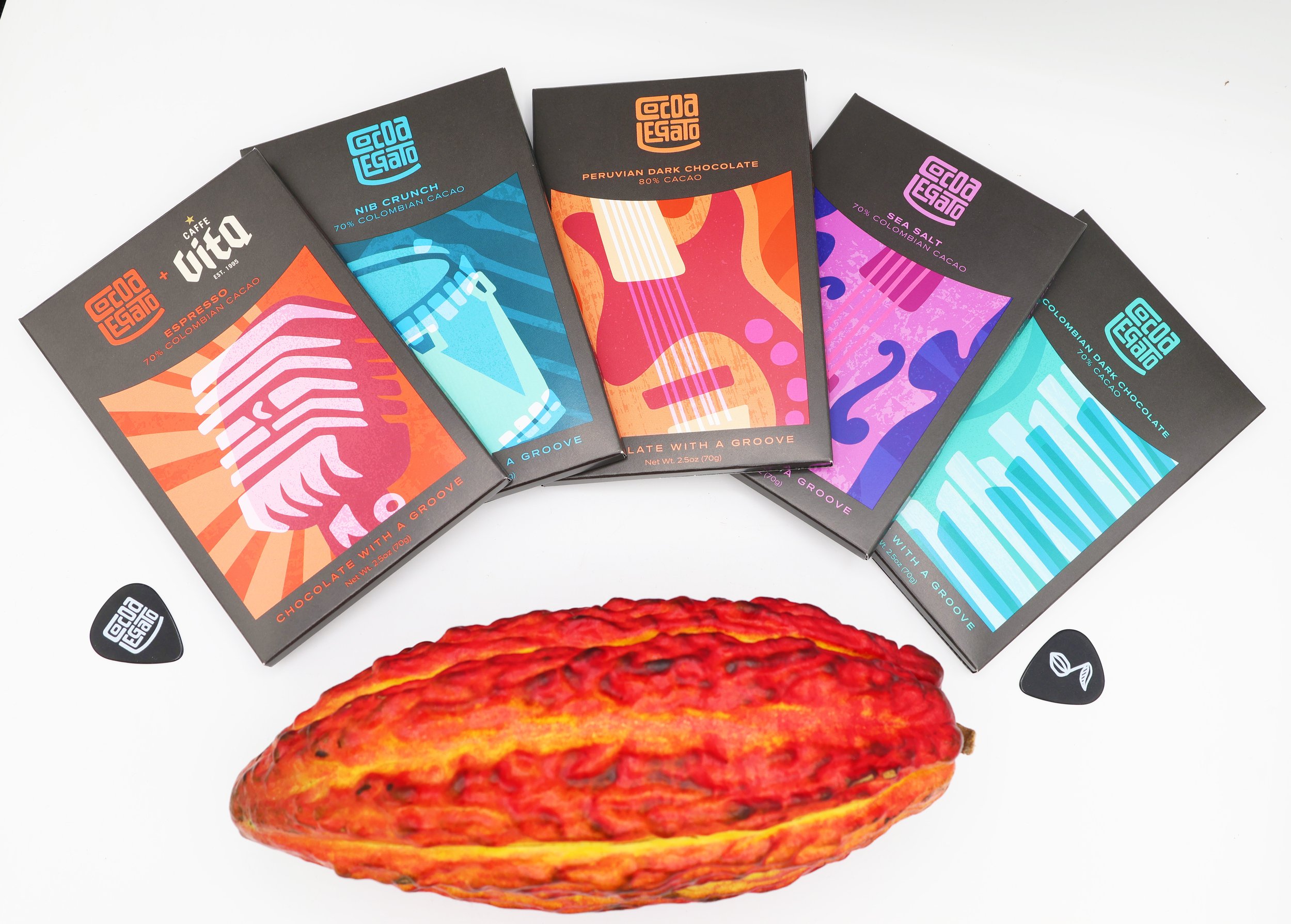
Each chocolate bar comes with a music pairing, showcasing a seattle-based queer, female, or bipoc artIst.
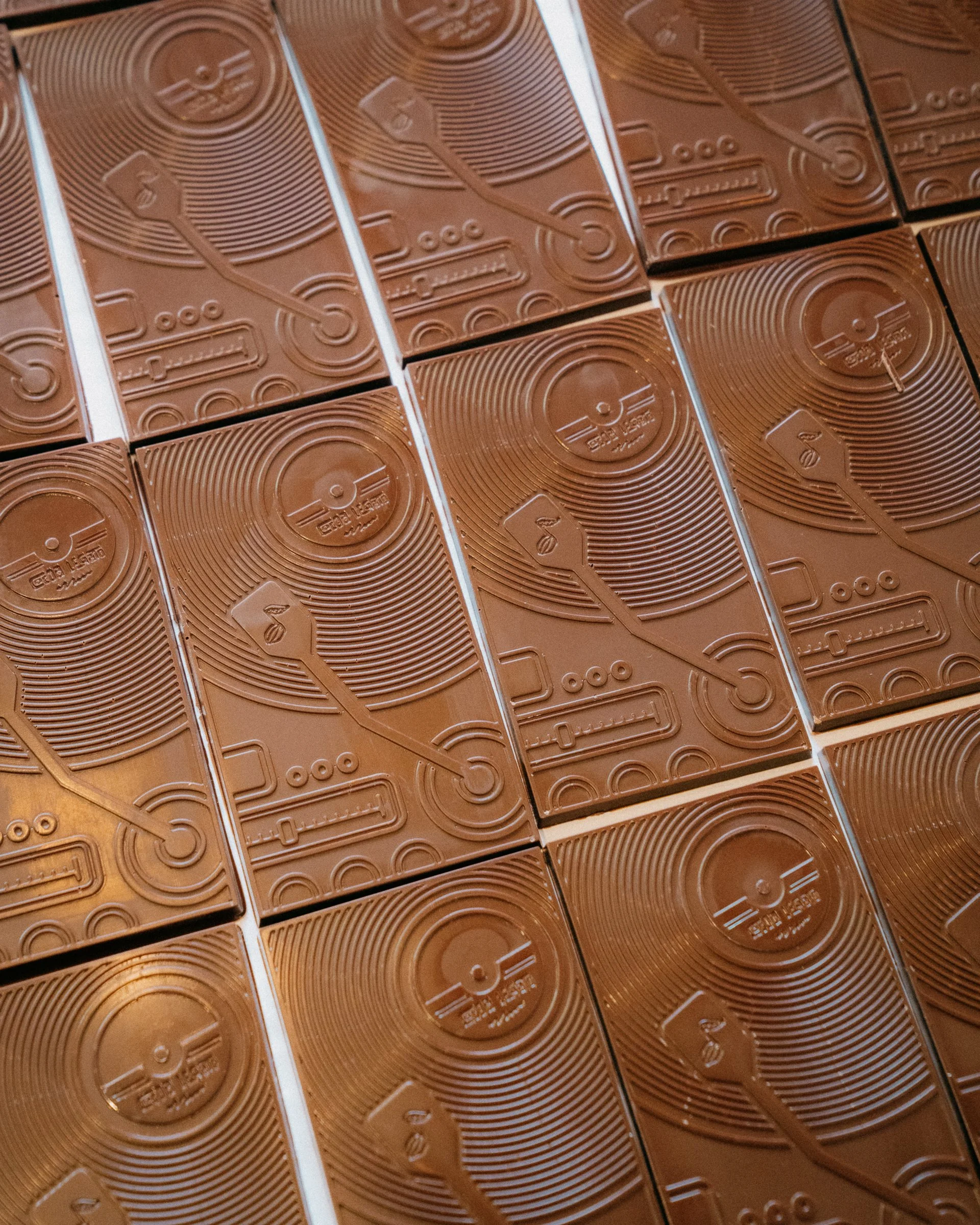
CRAFTED WITH CARE
-
ROOTED IN HERITAGE
Our founder, Aaron, is Colombian. To honor his heritage, Cocoa Legato has always been dedicated to sourcing primarily Colombian cacao. We partner with Cacaitos to source beans from the Chigorodó region. While the beans may not be certified organic, all cacao is grown using organic methods. We work with small enough farms that an official certification is not fiscally reasonable.
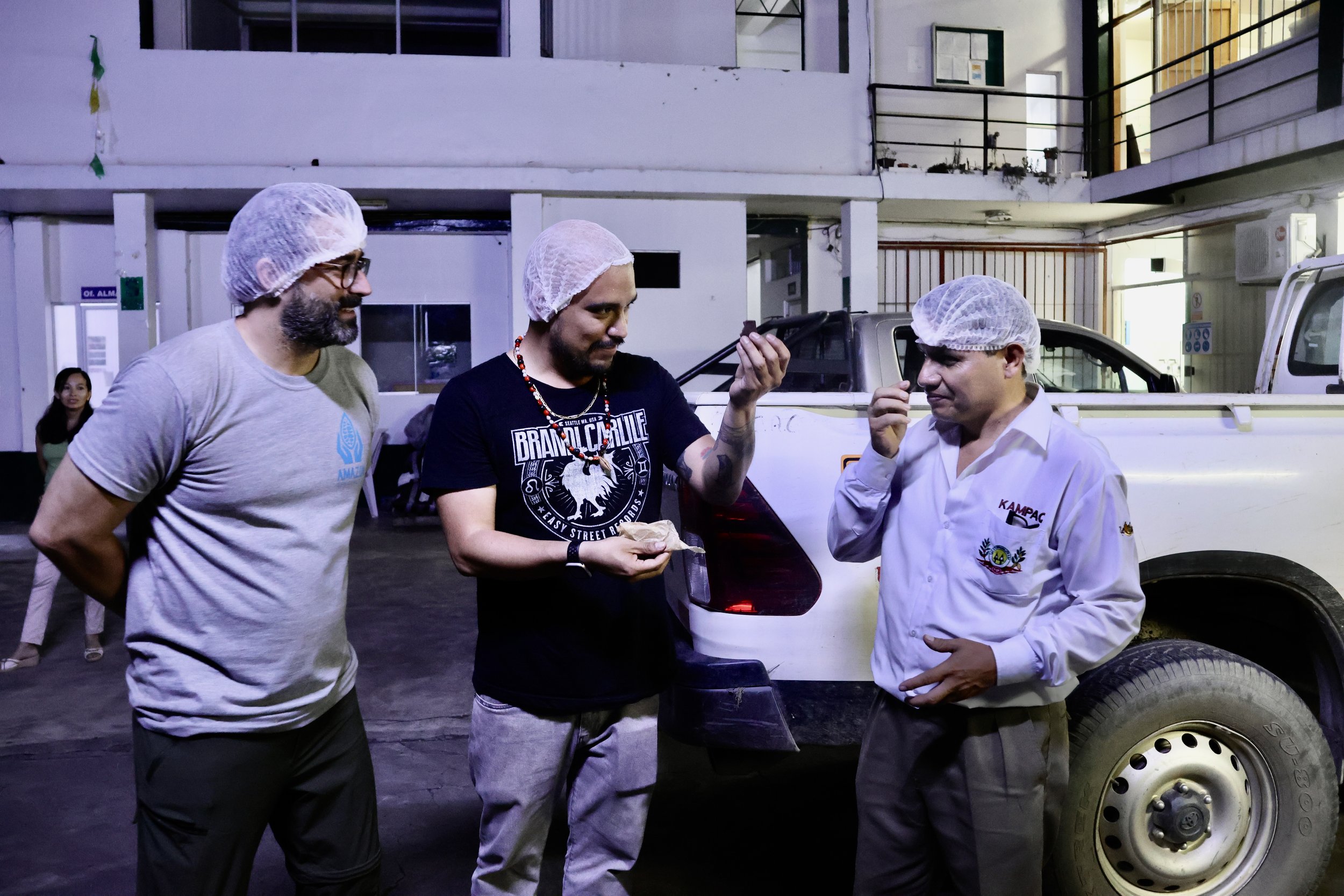
Additionally, we source Peruvian cacao from Cacao Life. In 2024, our founder took a trip to Cuzco to meet with the farmers we’re partnering with. You can see a photo of Aaron meeting with Edgar Adanibar, the head of the Co-Op, and Marco Fernadnez-Concha, the Co-Founder of Cacao Life. These beans are certified Organic.
-
'GREEN HARVESTED' SUGAR
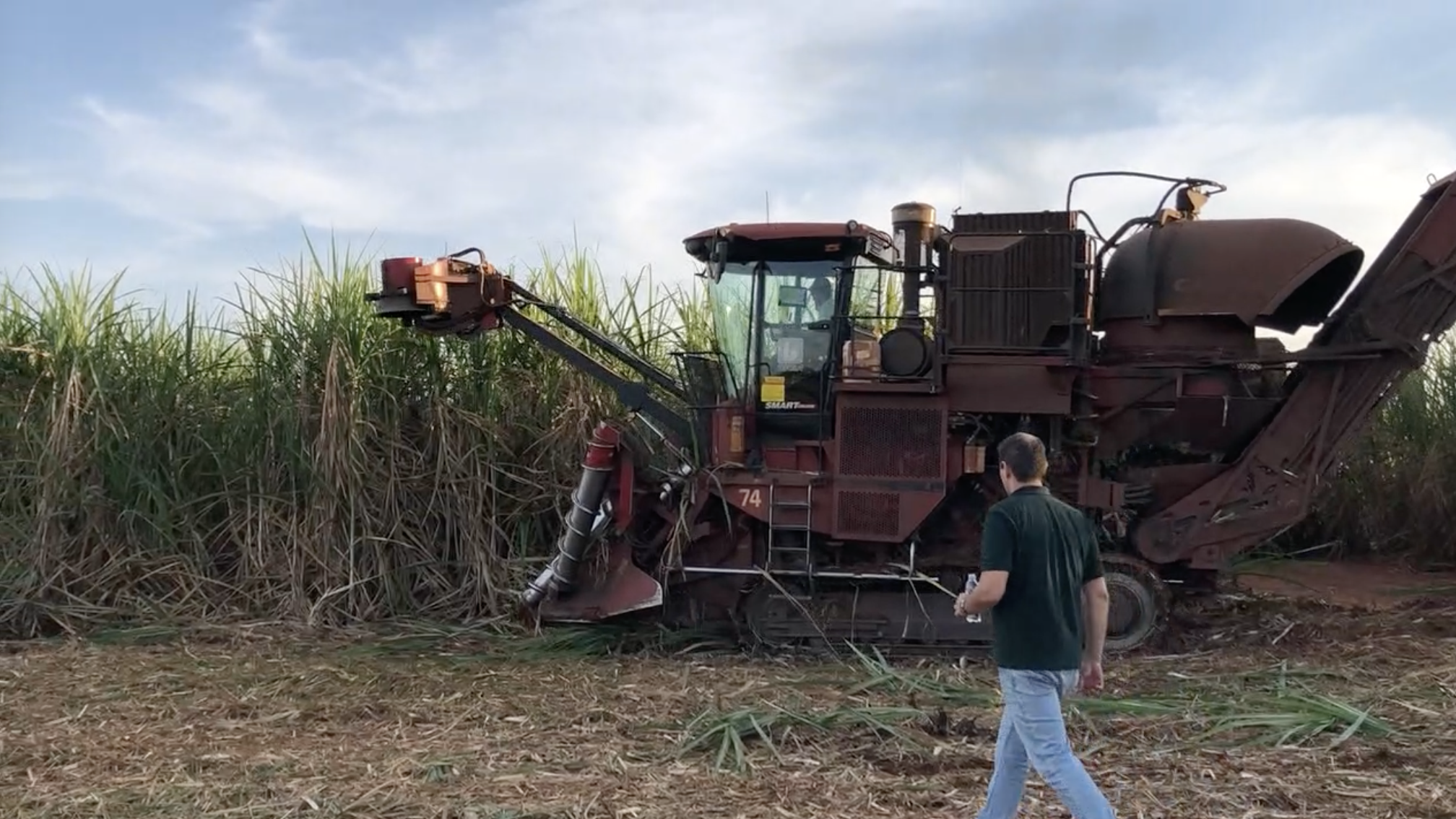
We use organic cane sugar from Brazil, sourced from Global Organics. This ensures that every bar is made with ingredients that are as respectful to the planet as they are to your taste buds.
Globlal Organics uses ‘green harvesting’ to mechanically harvest sugarcane without burning the fields. The traditional method of burning sugar cane to harvest releases large amounts of particulate matter and toxic air pollutants, which cause serious health problems to humans, wildlife, and near by plant life.
-
Continued Local Legacy
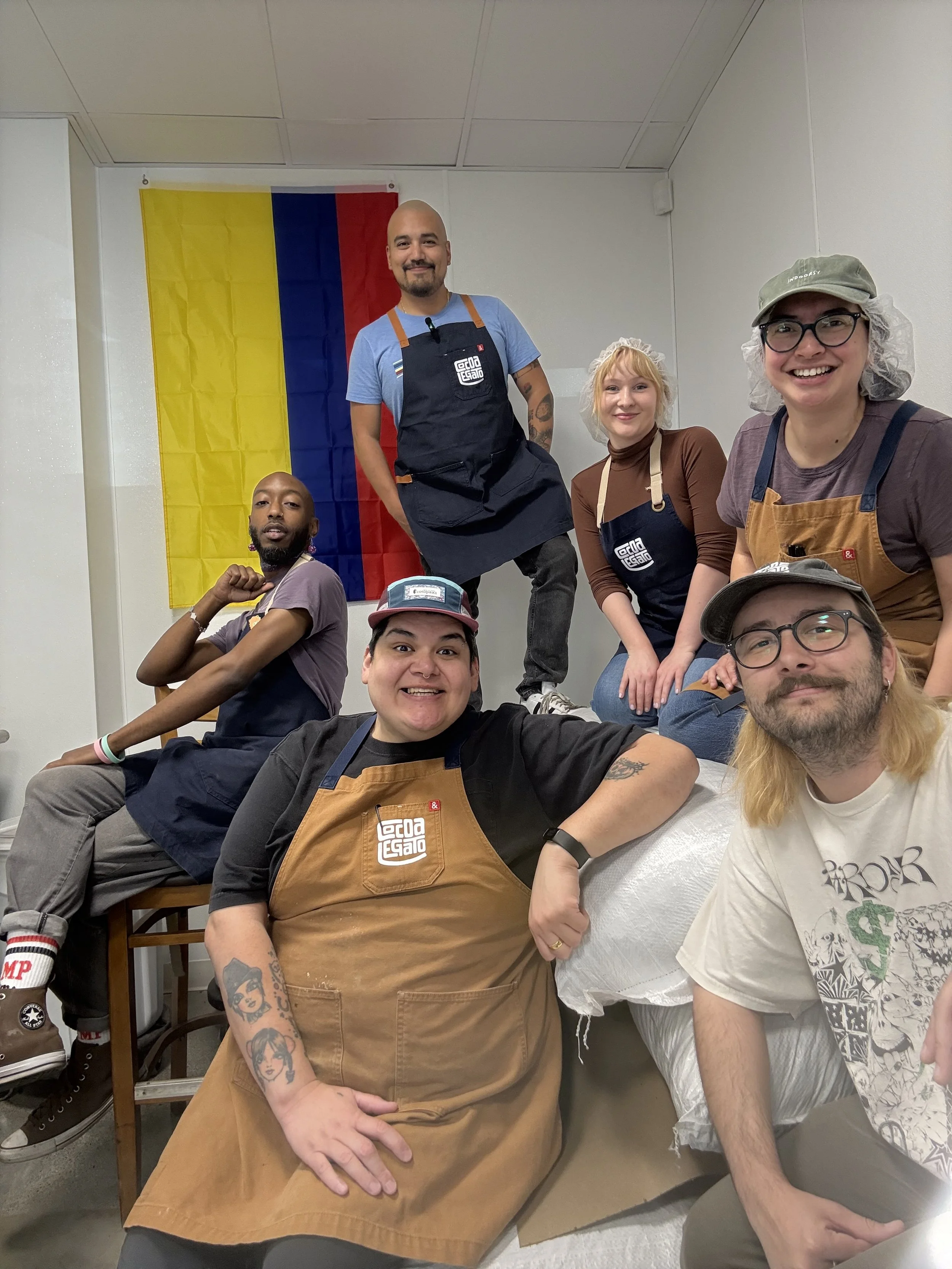
Every single bar of ours is handcrafted by our chocolate makers. The majority of our Legato team trained at Seattle’s former legendary company, Theo Chocolate, for years. We’re proud and honored to continue the tradition of well-made craft chocolate in Seattle.
What does ‘Bean to Bar’ mean?
"Bean to Bar" is a standard term in the chocolate world, meaning we’re part of the entire process starting with raw cacao beans from our trusted suppliers that we roast, refine, and mold into rich, handcrafted chocolate, right here in-house. Scroll down for a deep dive into our process.
-

1. Cocoa Tree and Pods
An evergreen tree that grows about 20 degrees north and south of the equator. This tree produces cocoa pods. These pods are what eventually become chocolate.
-

2. Fermentation Boxes
If you open a cacao pod, you’ll find a slimy mucus covering little cocoa beans. The fruit and beans are scooped out and placed into the fermentation boxes made from wood. The beans are then covered with banana leaves, trapping all the local bacteria in the air in the box. This allows fermentation to occur, the first step in flavor development!
-

3. Drying
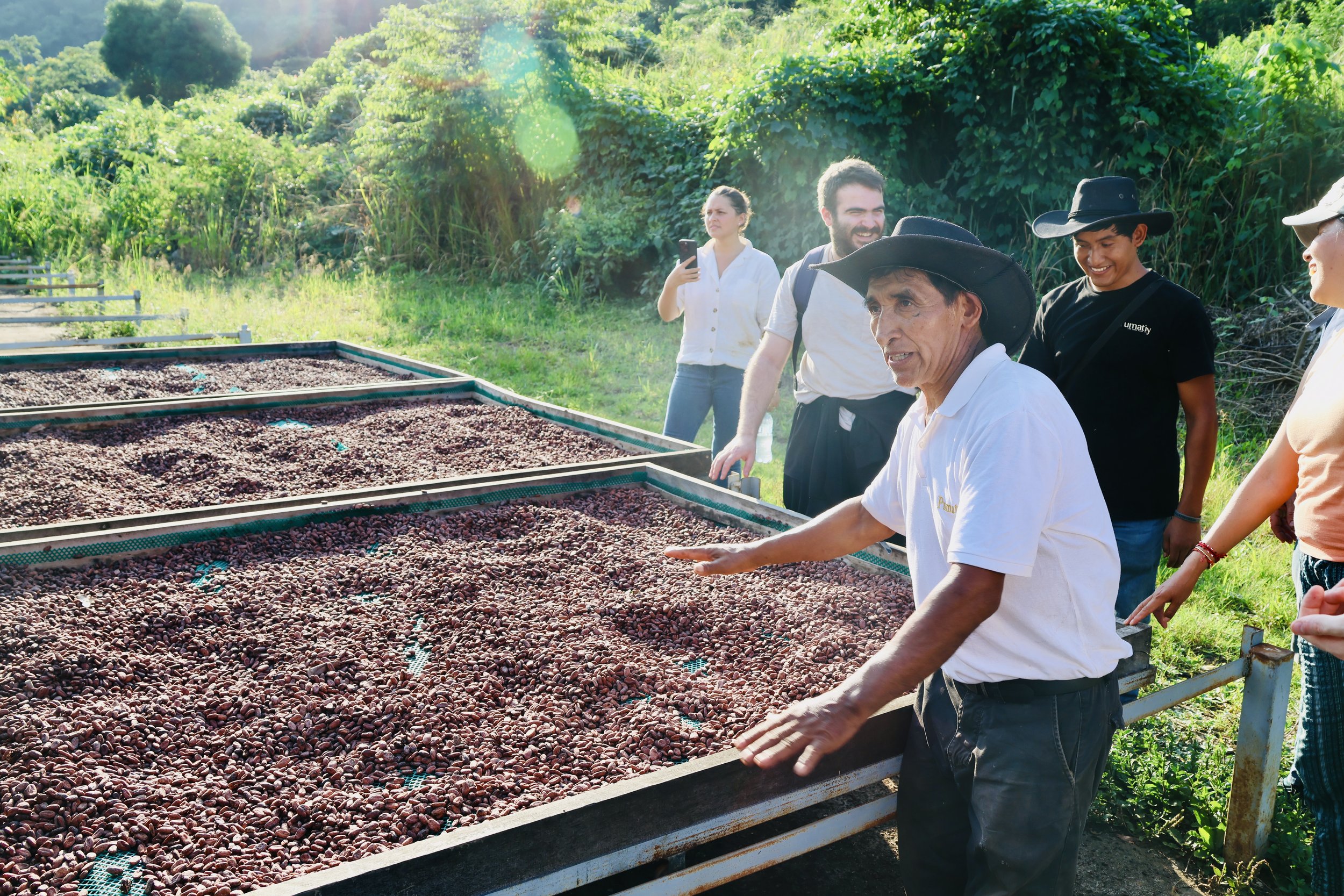
After 5 – 7 days of fermentation, the beans will be raked out onto large drying beds so the excess fruit will evaporate.
-

4. Bags
Beans are placed into large burlap sacks so they can safely make the journey from South America to our factory in Seattle.
-

5. Roasting
Roasting is a key step in flavor development. We roast our beans in a small convection oven. Since each type of cacao is unique, we roast our Colombian and Peruvian beans with completely different roast curves.
-

6. Winnowing
The next step is to remove the husk of the cocoa bean. Our Winnower crushes the beans into pieces and uses vacuums to remove the husks, leaving us with tiny cocoa nibs!
-

7. Milling
Time to pulverize! We toss our nibs into our large stone grinders and, over a 24-48 hours period, the nibs will be pulverized into a liquid form. We add sugar halfway through that process, giving us liquid chocolate!
-

8. Tempering and Depositing
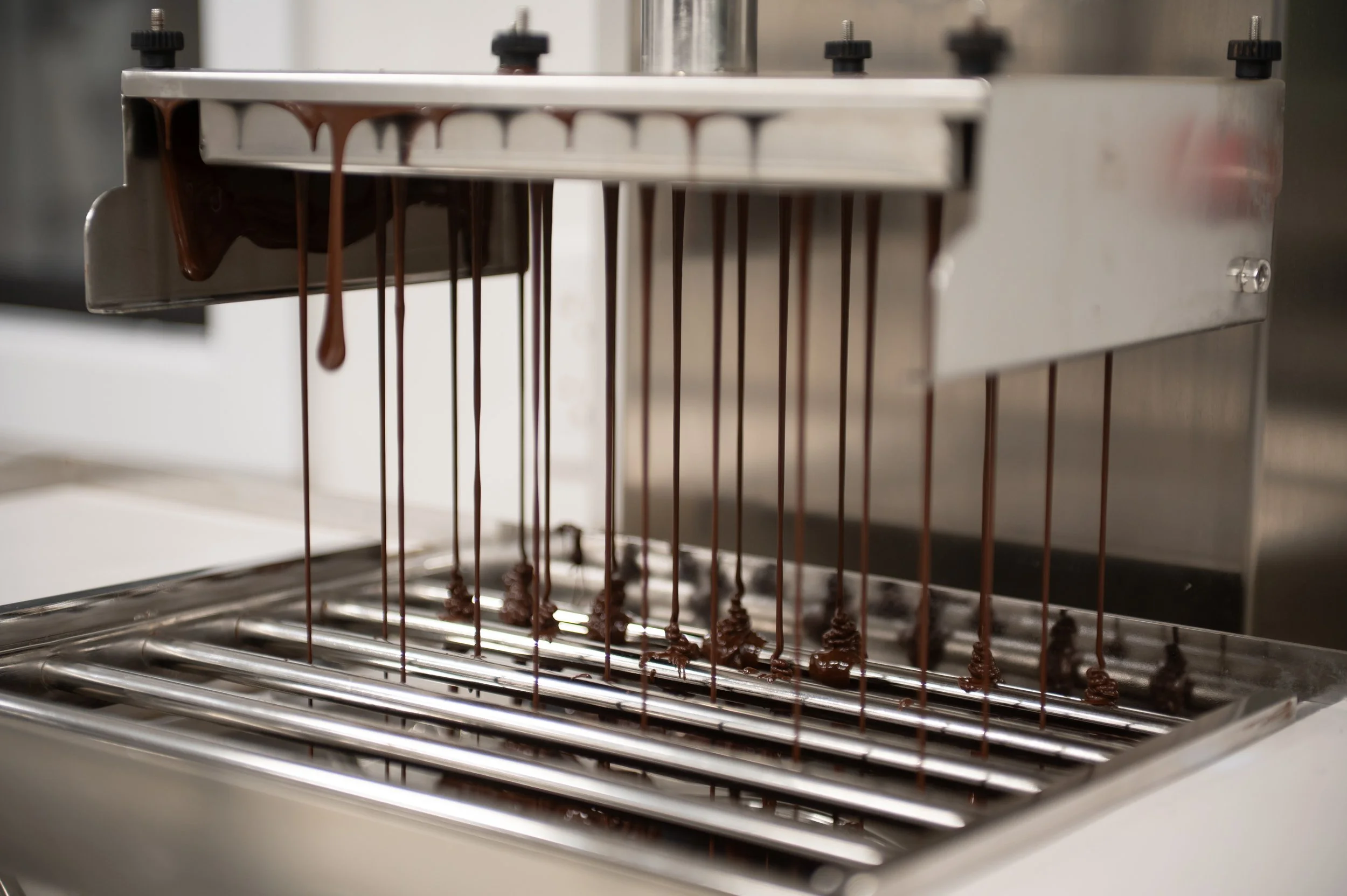
The final steps are to temper the chocolate (come take a class, and we’ll tell you all about that), add any extra fun inclusion, and then deposit the liquid chocolate into our molds.
-

9. Bar Mold
After letting that chocolate cool and solidify for a short period of time - you got a chocolate bar, baby!

We’ve got bars.
Visit our online store!